
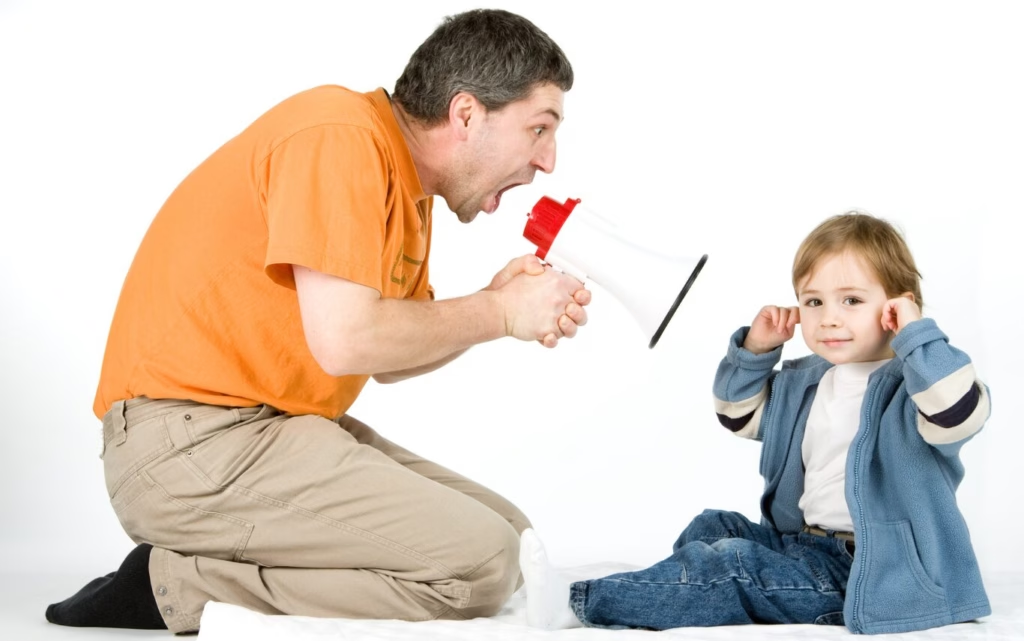
Yelling may get a child to comply in the moment, but it often works because the child becomes afraid, not because they understand what to do differently.
Fear Can Look Like Cooperation
When a parent becomes frightening, a child’s nervous system shifts into protection mode. They may stop the behavior, become quiet, or do what they are told, but their attention is focused on staying safe rather than learning.
Repeated or intense yelling can teach children that mistakes are dangerous, their perspective does not matter, or connection can disappear when someone is upset.
Living in a household where you felt afraid, vulnerable, and uncertain can lead to trauma as an adult.
Three Ways Children May Adapt
They Try to Be Perfect
Some children become highly responsible, anxious, or afraid of disappointing others. They may begin to believe they must perform perfectly to remain loved and accepted. In therapy, I work with adults on how to unwind this habit of mind. It causes a lot of distress because perfection is unattainable.
They Become Sneaky
Other children learn to hide mistakes, lie, or meet their needs in secret. This is not always because they do not care. They may believe honesty will lead to shame, anger, or rejection. Later on in life, these are adults who cannot clearly state their needs, they have shame around even having needs, so they continue to be sneaky. Addictions, cheating, and risky behavior may arise from these early beginnings.
They Stop Caring
Some children eventually give up trying to please the adults around them. They may become defiant, emotionally distant, or convinced that they are already “the bad kid.” You probably recognize these traits in adults you know and they are adults you likely want to avoid.
The Effects Can Follow Them Into Adulthood
Adults who were frequently yelled at as children may struggle with perfectionism, people-pleasing, anxiety, conflict avoidance, or difficulty expressing their needs. Relationships may feel unsafe, especially when another person is disappointed or angry.
Yelling is rarely the only factor, but repeated experiences of fear and disconnection can shape how a child understands themselves and relationships.
What Children Need Instead
Children still need clear limits and accountability. The goal is not to replace punishment with discipline. To guide them without making them afraid of you. Keep following me to learn how to stop yelling and what to do instead.
Learn more from Laura Fish about how to prevent yelling and other harmful parenting practices on my YouTube Channel, or follow me on Instagram, TikTok, and Facebook.